Build the list around five dinner shapes
One list works when dinners follow shapes, not five unrelated Pinterest projects. Weeknight Pantry’s default week:
- Stir-fry night — protein + frozen veg + rice
- Sheet-pan night — sausage or chicken + chopped vegetables
- Soup or stew night — lentils or beans + canned tomatoes
- Taco or bowl night — ground meat or beans + tortillas or rice
- Pasta or grain salad night — pasta or farro + vegetables + vinaigrette
Write the shapes on the list header before items. Shapes prevent cart drift—three random sauces with no plan. If you cannot name which night uses the item, it does not go in the cart yet.
Healthy here means vegetables forward, reasonable portions, variety across the week—not perfection or elimination of foods you enjoy. Flexibility keeps the list usable for real households.
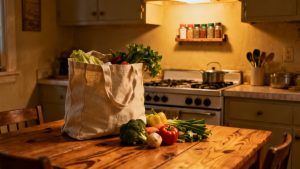
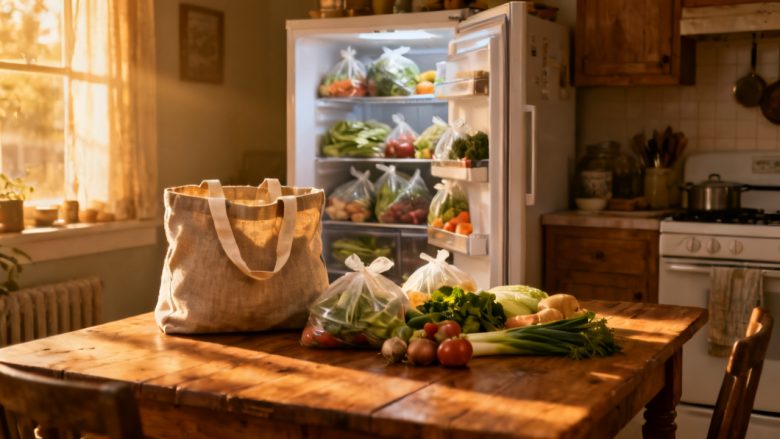
Produce that lasts all week
Split produce into early-week delicate and late-week sturdy:
- Eat Mon–Tue: spinach, salad greens, broccoli, mushrooms
- Eat Wed–Fri: carrots, cabbage, bell peppers, onions, potatoes, kale
One mistake is buying seven days of salad greens on Sunday—they slime by Thursday. Buy one small clamshell for early week; midweek sturdy slaw—shredded cabbage with vinaigrette—replaces wilted lettuce without a second full shop if you planned cabbage from the start.
Fruit for snacks: apples and oranges store well; berries for first days only unless frozen. A lemon and a lime cover acid for the whole week across stir-fry, soup, and tacos.
Protein rotation without boredom
One list, three proteins, no single-source fatigue:
Example cart proteins: 1½ lb chicken thighs, 1 lb ground turkey or beef, 2 cans beans, 1 dozen eggs, optional 1 lb firm tofu if your household eats it. Thighs hit sheet-pan night; ground meat hits tacos; beans and eggs cover soup and fried rice backup.
Season proteins differently even when shapes repeat—taco spice Monday, soy-ginger Thursday—so palates do not revolt by Wednesday. Marinades can be oil plus spice for thirty minutes while you chop; overnight luxury is optional.
Portion proteins at home into meal units if bulk packs are cheaper: divide 3 lb chicken into three bags before freezing two. Bulk savings disappear if you cook one giant batch nobody wants repeated.
The Sunday chop that pays off Wednesday
Spend twenty-five minutes Sunday washing and chopping only shared aromatics: dice two onions into a container, mince garlic into another, maybe slice peppers. Do not pre-chop lettuce or avocado—they oxidize and look sad by Tuesday.
Wednesday stir-fry at 6:15pm succeeds because onions are already diced—one less barrier when hungry. The chop is not full meal prep; it is friction removal. Pair with cooked rice frozen flat from a prior week or a quick-cook batch while the first pan heats.
If Sunday failed, Monday evening chop while something simmers still counts. Perfect Sunday persona is optional; reduced friction is mandatory.
Midweek grocery top-up, or skip it
Design the list to avoid a second trip when possible—sturdy produce and frozen vegetables cover the back half of week. If you must top up, allow only three items: milk, bread, one fresh veg. Open-ended midweek shopping destroys the one-list discipline and usually adds snacks not dinners.
Keep a pantry shelf with backup: canned beans, pasta, jarred marinara, rice, stock cubes or boxed broth. Backup night is still a planned shape—pasta night—not failure. Failure is standing in aisle five with no idea and a cart of chips.
Photograph the list on your phone after writing it; paper lists disappear in parking lots. Same list photo can become next week’s template with two line edits.
Seasonal swaps keep the list fresh without reinventing it: asparagus in spring on sheet-pan night, butternut squash in fall in soup, frozen green beans anytime in stir-fry. Shapes stay; one produce line rotates with calendar.
Mix-and-match bowl night
Reserve Friday or your busiest night for bowl night: rice or quinoa base, whatever protein remains, whatever vegetable is left, sauce from fridge door. Bowl night clears the crisper before the next Sunday shop and teaches you which quantities your household actually consumes.
Sauce options without new shopping: peanut butter whisked with soy sauce and lime; yogurt with garlic and salt; salsa mixed with sour cream; olive oil and lemon. Bowl night is where leftovers become intentional instead of apologetic.
Kids can assemble their own bowls when components are plain and toppings are separate—less waste from plates scraped into trash because sauce touched something green they were not ready to negotiate with.
Sample one-week cart you can copy
Produce: 1 bag spinach, 1 head cabbage, 3 onions, 4 bell peppers, 1 lb carrots, 1 bunch kale, 2 lemons, 3 apples. Protein: 1½ lb chicken thighs, 1 lb ground turkey, 1 dozen eggs, 2 cans black beans. Pantry pulls: rice, pasta, canned tomatoes, tortillas, frozen stir-fry veg, olive oil, soy sauce, taco seasoning, broth. Dairy if used: milk, yogurt, cheese block.
Map to shapes: Mon tacos with ground turkey; Tue sheet-pan chicken thighs with carrots; Wed lentil or bean soup using canned tomatoes; Thu stir-fry with frozen veg and leftover rice; Fri pasta with spinach wilted in garlic oil or bowl night clearing peppers and kale. Adjust quantities for household size—this cart assumes two adults and one child or two adults who lunch leftovers.
Cross off items already in pantry before shopping. The list is template, not mandatory purchase every Sunday. Empty pantry backup shelf makes the list shorter over time; that is success, not cheating.
Bring the shape list to the store on paper or phone screen—not buried in notes app three folders deep. Visible plan at checkout prevents impulse rotisserie chicken when cart already contains thighs for sheet-pan night. If impulse wins occasionally, swap a planned night instead of doubling protein spend silently.
Photograph your cart once
After checkout, snap one photo of the cart or receipt circled items. Next week compare: did every protein and sturdy vegetable appear in dinners eaten? Adjust quantities before adding new recipes.
One grocery list for a week of healthy dinners is a planning habit, not a magic template. Keep the five shapes, split delicate and sturdy produce, rotate proteins with different seasonings, and let bowl night absorb error. Weeknight Pantry lists should get shorter over time as pantry backup improves—not longer as ambition grows.