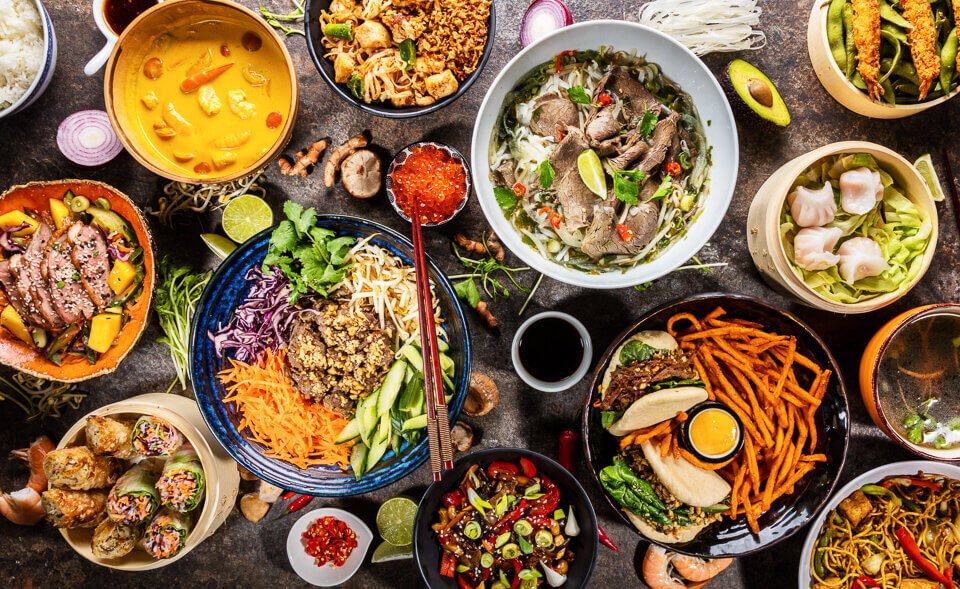
I remember the first time I ate a proper Thai green curry. It was not in a restaurant with English menus and mild spice levels. It was in a small, open-air kitchen in Chiang Mai, where a woman named Noi stirred a pot over a charcoal flame, pounding her own curry paste in a stone mortar each morning. The curry was electric green, fiercely hot, and layered with flavors I had never tasted before. Galangal, not ginger. Thai basil, not the Italian variety I knew. Fish sauce that added depth without obvious saltiness. Coconut milk that soothed the heat while carrying it forward. I finished the bowl in silence, tears streaming from the chili, and realized that I had been eating a shadow of Thai food my entire life.
That meal changed how I think about cooking. I had always believed that good food was universal, that technique transcended borders. What I learned in Noi’s kitchen was that every cuisine is a complete system of knowledge, built over centuries, shaped by climate and geography, and inseparable from the culture that created it. You cannot truly understand Italian cooking without understanding the Italian relationship to time, family, and seasonality. You cannot master Mexican cuisine without respecting the indigenous ingredients and techniques that predate colonization. Food is not just sustenance. It is a language, a history, and a way of seeing the world.
This article explores ethnic and world cuisine as a cook and a learner. We will journey through major culinary traditions, understand what makes each unique, learn how to cook authentically without appropriating, and discover how global flavors can enrich your own kitchen. Whether you are a curious beginner or an experienced cook looking to expand your horizons, this guide will help you approach world cuisine with respect, knowledge, and genuine appreciation.
Why Exploring World Cuisine Matters
Before diving into specific traditions, it is worth understanding why cooking beyond your own cultural background is valuable and how to do it responsibly.
Food as Cultural Bridge
Cooking another culture’s cuisine is one of the most intimate ways to engage with that culture. It requires understanding their ingredients, their techniques, their preferences, and their values. It is not tourism. It is participation. When I cook Ethiopian injera or Japanese ramen, I am not just making dinner. I am stepping into a tradition that is not mine, learning from it, and honoring it through my effort.
This engagement builds empathy. The cook who has struggled to roll a proper Chinese dumpling understands something about the skill and patience that Chinese cooks bring to their craft. The cook who has toasted spices for an Indian curry appreciates the complexity that Indian home cooks manage daily. Food is a universal language, but fluency requires study and practice.
Avoiding Appropriation
There is an important distinction between appreciation and appropriation. Cooking world cuisine respectfully means acknowledging origins, learning from authentic sources, and avoiding the reduction of complex traditions to trendy ingredients or simplified stereotypes.
I avoid calling my Thai curry “authentic” because I learned it from one cook in one region, and Thai cuisine is vast and varied. I credit my sources. I do not claim expertise I do not have. I approach these cuisines as a student, not an owner. This humility is essential for respectful engagement.
Expanding Your Palate and Skills
Every cuisine teaches you something new. Mexican cooking deepens your understanding of chili peppers. Japanese cuisine refines your knife skills. Indian cooking expands your spice knowledge. French technique builds your sauce repertoire. The more traditions you explore, the more versatile and creative you become.
Asian Cuisines: Depth, Balance, and Technique
Asian cooking encompasses vast and diverse traditions, from the fermented complexity of Korean food to the delicate precision of Japanese cuisine. What unites them is a sophisticated understanding of balance and an emphasis on technique.
Chinese Cuisine
Chinese cooking is perhaps the most diverse in the world, with eight major regional cuisines and countless local variations. What unites them is the philosophy of balance, between yin and yang, between the five flavors, between textures and temperatures.
The wok is the heart of Chinese cooking. Its shape allows for even heat distribution and easy tossing. Wok hei, the breath of the wok, is the smoky flavor achieved only through intense heat and rapid movement. It is difficult to replicate on a home stove, but understanding the principle helps you adapt.
Key techniques include stir-frying, steaming, braising, and deep-frying. Key ingredients include soy sauce, rice wine, sesame oil, ginger, garlic, and scallions. The flavor profile ranges from the numbing spice of Sichuan peppercorns to the sweet-savory balance of Cantonese dishes.
I spent months learning to make dumplings from a Chinese friend. The filling was simple, pork, cabbage, ginger, and scallions. But the pleating technique took weeks to master. Each dumpling is a small package of care, and the difference between a clumsy fold and a proper one is visible and textural.
Japanese Cuisine
Japanese cooking is defined by simplicity, seasonality, and an almost religious attention to ingredient quality. The philosophy is that great ingredients need minimal manipulation. A perfect piece of sashimi is sliced and served. A perfect peach is eaten raw.
Key techniques include precise knife work, gentle simmering, and careful rice preparation. Dashi, a simple broth of kombu and bonito flakes, is the foundation of countless dishes. Miso, soy sauce, and mirin provide depth and umami.
Japanese home cooking, washoku, is different from the restaurant cuisine most Westerners know. It emphasizes one soup, one rice, and multiple small dishes. Balance across the meal matters more than any single impressive dish.
Thai Cuisine
Thai cooking is a masterclass in balancing contrasting flavors. Sweet, sour, salty, spicy, and bitter must coexist in every dish. A proper Thai curry contains all five elements, with no single flavor dominating.
The mortar and pestle is essential equipment. Curry pastes, som tam, and many sauces require pounding to release flavors that chopping cannot achieve. The difference between pre-made curry paste and freshly pounded is the difference between a photograph and a painting.
Fish sauce, palm sugar, lime, and chili are the foundational seasonings. Coconut milk provides richness and tames heat. Thai basil, kaffir lime leaves, and galangal add aromas that define the cuisine.
Indian Cuisine
Indian cooking is perhaps the most spice-sophisticated cuisine in the world. The spice box, masala dabba, contains the building blocks of countless dishes. Cumin, coriander, turmeric, mustard seeds, fenugreek, and cardamom are just the beginning.
Understanding how to bloom spices in hot oil is fundamental. Whole spices added to hot oil release fat-soluble flavors that form the base of the dish. Timing matters. Add too early and they burn. Add too late and they remain raw.
Regional variation is enormous. North Indian cuisine features wheat breads, dairy, and rich Mughlai influences. South Indian cuisine emphasizes rice, coconut, and tamarind. The cuisine of the west coast is seafood-heavy, while the northeast features ingredients and techniques influenced by Southeast Asia.
Korean Cuisine
Korean cooking is defined by fermentation, bold flavors, and communal eating. Kimchi, the fermented vegetable staple, is present at virtually every meal. Gochujang, a fermented chili paste, provides depth and heat. Doenjang, fermented soybean paste, adds umami.
Banchan, the array of small side dishes that accompany every meal, is a defining feature. A proper Korean table contains multiple banchan, rice, soup, and a main dish. The variety and balance across the meal is the goal.
Korean barbecue, with its tableside grilling and lettuce wraps, has become globally popular. But the home cooking tradition, with its soups, stews, and rice dishes, is equally rich and rewarding.
Mediterranean and Middle Eastern Cuisines: Sun, Olive Oil, and Ancient Traditions
The Mediterranean and Middle Eastern regions share a culinary philosophy built on olive oil, grains, vegetables, and a deep history of trade and exchange.
Italian Cuisine
Italian cooking is often misunderstood as pasta and pizza. In reality, it is a regional cuisine of extraordinary diversity, unified by a reverence for quality ingredients and simplicity of preparation.
The concept of cucina povera, peasant cooking, is central. Making delicious food from humble ingredients is the highest skill. A perfect aglio e olio, pasta with garlic and oil, requires only a few ingredients but demands precise technique.
Regional variation is vast. Northern Italy features butter, cream, rice, and polenta. Central Italy is known for olive oil, cured meats, and pasta. Southern Italy and the islands emphasize tomatoes, seafood, and citrus. Each region has its own pasta shapes, sauces, and traditions.
The Italian meal structure is also distinctive. Antipasto, primo, secondo, contorno, and dolce create a progression that balances flavors and textures. Understanding this structure helps you compose meals that feel authentically Italian.
Greek Cuisine
Greek cooking emphasizes the Mediterranean triad: wheat, olive oil, and wine. Vegetables, legumes, grains, and seafood dominate. Meat is present but not central.
Key ingredients include feta cheese, olives, lemons, oregano, and yogurt. Phyllo dough, used in spanakopita and baklava, requires skill and patience to handle properly. The result is layers of crisp, flaky pastry that contrast with rich fillings.
Greek home cooking is hearty and satisfying. Stews, casseroles, and roasted dishes are designed for family gatherings and slow enjoyment. The Greek concept of philoxenia, love of strangers, is expressed through generous hospitality and abundant food.
Middle Eastern Cuisine
Middle Eastern cooking spans a vast region from North Africa to Central Asia, with shared ingredients and techniques that create a coherent culinary identity.
The spice palette is warm and aromatic. Cumin, coriander, cinnamon, cardamom, sumac, and za’atar appear across the region. Tahini, a paste of sesame seeds, provides richness and depth. Pomegranate molasses adds sweet-tart complexity.
Flatbreads are universal. Pita, lavash, and manousheh serve as utensils, plates, and accompaniments. They are baked quickly at high heat, creating pockets and char that define their character.
Mezze, the array of small dishes that precede or compose a meal, is a defining tradition. Hummus, baba ganoush, tabbouleh, falafel, and olives create a communal eating experience that is social as much as culinary.
I learned to make hummus from a Lebanese friend who insisted that the secret was not the recipe but the technique. Starting with dried chickpeas, cooking them until tender, blending while warm, and adding tahini and lemon gradually. The result was silken, deeply flavored, and nothing like the grocery store versions I had known.
Latin American Cuisines: Indigenous Roots and Colonial Fusion
Latin American cooking is a story of indigenous ingredients meeting European, African, and Asian influences, creating vibrant, diverse traditions.
Mexican Cuisine
Mexican cooking is one of the world’s great cuisines, recognized by UNESCO as an intangible cultural heritage. It is built on indigenous ingredients that predate colonization: corn, beans, squash, chili peppers, tomatoes, and chocolate.
The tortilla is foundational. Corn tortillas, made from nixtamalized masa, have a flavor and texture that wheat cannot replicate. Nixtamalization, cooking corn in alkaline solution, is an ancient technique that unlocks nutrients and creates the distinctive taste.
Mole, the complex sauce that combines chili peppers, chocolate, nuts, seeds, and spices, represents the height of Mexican culinary artistry. Each region has its own mole, and each family has its own recipe. Making mole properly takes days and is often reserved for celebrations.
Salsas are essential. Fresh salsas like pico de gallo provide brightness. Cooked salsas like salsa roja and salsa verde add depth. Chile-based salsas bring heat and complexity. A Mexican table without salsa is incomplete.
Peruvian Cuisine
Peruvian cooking has emerged as one of the most exciting global cuisines, blending indigenous ingredients with Japanese, Chinese, and European techniques.
Ceviche, raw fish cured in citrus juice, is the iconic dish. The quality of the fish and the balance of citrus, chili, and onion determine success. Each region has its own variation, from the classic Lima style to the spicier northern versions.
The potato, native to Peru, appears in hundreds of varieties and preparations. Aji amarillo, a yellow chili pepper, provides a distinctive fruity heat that defines many Peruvian dishes.
Brazilian Cuisine
Brazilian cooking reflects the country’s vast size and diverse population. The feijoada, a black bean stew with pork, is the national dish of the south. The northeast features seafood, coconut, and dendê palm oil. The Amazon region contributes unique fruits and ingredients.
Churrasco, the southern Brazilian barbecue tradition, has become globally popular. But the home cooking tradition, with its rice, beans, and simple preparations, is equally important and accessible.
African Cuisines: Ancient Traditions and Modern Innovation
African cooking is perhaps the most underrepresented in global culinary discourse, which is a profound loss. The continent’s diverse traditions offer extraordinary flavors, techniques, and ingredients.
West African Cuisine
West African cooking is built on staples like rice, millet, yams, and plantains. The flavor profile is bold, with fermented ingredients, smoked fish, and powerful spice blends.
Jollof rice, a one-pot dish of rice, tomatoes, and spices, is beloved across the region with fierce regional rivalries about whose version is best. The technique of cooking rice in a tomato-based stew creates a distinctive flavor and color.
Peanut stew, featuring ground peanuts as a thickener and flavor base, is rich, satisfying, and deeply nutritious. Fermented locust beans, iru or dawadawa, add umami depth that is difficult to replicate.
Ethiopian Cuisine
Ethiopian cooking is one of the most distinctive in the world. Injera, a sourdough flatbread made from teff, serves as both plate and utensil. Wat, thick stews of meat or vegetables, are eaten by scooping with pieces of injera.
The spice blend berbere is essential. It contains chili peppers, garlic, ginger, and numerous spices, creating a complex, fiery base for many dishes. Niter kibbeh, spiced clarified butter, adds depth and richness.
Ethiopian meals are communal. A large platter of injera is topped with multiple wats and salads, and diners eat from the shared plate. This social dimension is as important as the food itself.
I ate my first Ethiopian meal in a restaurant where the owner explained each dish and demonstrated the proper way to eat with injera. The combination of flavors, the tactile experience of eating with my hands, and the communal nature of the meal made it unforgettable.
North African Cuisine
Moroccan, Tunisian, and Algerian cooking blend Berber, Arab, Mediterranean, and sub-Saharan influences. The tagine, a conical clay pot, creates slow-cooked stews of extraordinary depth.
Preserved lemons, olives, and dried fruits are characteristic ingredients. Ras el hanout, a complex spice blend that can contain dozens of components, provides the signature flavor of Moroccan cooking.
Couscous, steamed semolina granules, is the staple starch. Properly prepared, it is light, fluffy, and the perfect vehicle for rich stews.
European Cuisines: Technique, Tradition, and Terroir
European cooking encompasses enormous diversity, from the hearty fare of Eastern Europe to the refined techniques of France.
French Cuisine
French cooking is the foundation of Western culinary technique. The mother sauces, the knife cuts, the cooking methods, and the organizational system of the professional kitchen all originated or were codified in France.
But French home cooking is different from the haute cuisine of restaurants. It is simpler, more seasonal, and deeply practical. A poulet rôti, roasted chicken, is a Sunday tradition. A simple vinaigrette transforms salad. A tarte tatin, an upside-down caramelized apple tart, is impressive but not difficult.
The French concept of terroir, the taste of place, emphasizes that ingredients express their origin. A cheese from one region tastes different from the same cheese made elsewhere. This respect for provenance shapes French cooking fundamentally.
Spanish Cuisine
Spanish cooking is built on quality ingredients treated simply. Jamón ibérico, olive oil, seafood, and vegetables are the stars. The tortilla española, a thick potato and egg omelet, is a national dish that demonstrates this simplicity.
Tapas, the small plates that accompany drinks, create a social eating tradition that is as much about conversation as food. Paella, the rice dish from Valencia, has become globally famous but is often poorly reproduced outside Spain. Authentic paella is cooked over open fire, develops a caramelized crust called socarrat, and is never overloaded with ingredients.
Eastern European Cuisine
Eastern European cooking is hearty, practical, and designed for cold climates. Soups, stews, dumplings, and preserved foods dominate. Sour flavors from fermented vegetables and dairy provide balance to rich dishes.
Borscht, the beet soup that appears across the region, is nutritious, economical, and deeply satisfying. Pierogi, filled dumplings, are labor-intensive but beloved. The cabbage rolls of various traditions, stuffed with meat and rice and simmered in tomato sauce, are comfort food at its finest.
Building a Global Pantry
Cooking world cuisine requires ingredients that may not be in your standard pantry. Here is how to build a collection that supports diverse cooking.
Start with One Cuisine
Do not try to stock every global ingredient at once. Choose one cuisine that interests you. Buy the essential spices, sauces, and staples for that tradition. Cook several dishes. Then expand to another cuisine.
Find Ethnic Markets
Ethnic grocery stores are treasure troves of authentic ingredients, often at lower prices than mainstream supermarkets. The staff can usually guide you to the right products and may share cooking advice.
Buy Whole Spices
Whole spices keep longer and taste better than pre-ground. A small spice grinder allows you to toast and grind as needed. This single investment dramatically improves the quality of your cooking across all cuisines.
Understand Substitutions
Some ingredients are irreplaceable. Others have acceptable substitutes. Fish sauce can sometimes be replaced with soy sauce and a pinch of sugar. Fresh galangal is difficult to substitute, but dried is better than omitting it. Build knowledge of which substitutions work and which do not.
Store Properly
Spices lose potency over time. Store them in airtight containers away from heat and light. Whole spices last years. Ground spices last months. Replace them when they no longer smell fragrant.
Common Mistakes When Cooking World Cuisine
Even well-intentioned cooks make predictable errors when exploring unfamiliar traditions.
Oversimplifying Complex Traditions
Reducing Mexican cuisine to tacos and burritos, or Chinese cuisine to stir-fry and fried rice, misses the depth and diversity of these traditions. Approach each cuisine with humility and a willingness to learn its full range.
Using Inferior Substitutions
Pre-ground spices, bottled lime juice, and low-quality soy sauce produce inferior results. Invest in authentic ingredients when they matter. The difference is often dramatic.
Ignoring Technique
Many world cuisines rely on specific techniques that cannot be shortcut. Properly pounding a curry paste, folding dumplings, or steaming rice requires practice. Do not rush these steps.
Disrespecting Cultural Context
Cooking another culture’s food is a privilege, not a right. Acknowledge origins. Learn from authentic sources. Avoid claiming expertise you do not have. Credit your teachers.
Being Afraid of Strong Flavors
Many world cuisines are bolder than Western palates are accustomed to. Do not automatically reduce spice, salt, or funk. Taste the cuisine as it is intended before adjusting. You may discover preferences you did not know you had.
Practical Tips for Exploring World Cuisine
Here are habits that will deepen your engagement with global cooking.
Cook with people from the culture. There is no substitute for learning from someone who grew up with the cuisine. Ask questions. Observe technique. Listen to stories.
Travel through food if you cannot travel in person. Cooking a meal from a place you have never been is a form of travel. It engages your senses and imagination in ways that reading or watching cannot.
Learn the language of flavor. Each cuisine has a vocabulary of tastes and aromas. Learn to recognize them. The funk of fermented fish sauce. The numbing tingle of Sichuan peppercorn. the grassy freshness of Mexican epazote. This vocabulary enriches your cooking across all traditions.
Document your journey. Keep notes on what you cook, what worked, and what you want to improve. Over time, this becomes a personal cookbook of global exploration.
Share what you learn. Cooking for others is the best way to solidify your knowledge. It also spreads appreciation for cuisines that deserve wider recognition.
Frequently Asked Questions
How do I start cooking a new cuisine without being overwhelmed?
Choose one dish that appeals to you. Buy the essential ingredients for that dish. Master it. Then expand to related dishes. Building gradually prevents overwhelm and builds confidence.
Are ethnic markets better than mainstream supermarkets for world cuisine?
Usually yes. They offer authentic ingredients, better prices, and expertise from staff who cook the cuisine themselves. Even if some products lack English labels, the quality and authenticity are often superior.
How do I know if a recipe is authentic?
Look for recipes from cooks within the culture, published in their language or by reputable cultural sources. Be skeptical of recipes that simplify excessively or substitute core ingredients without explanation.
Can I adapt recipes for dietary restrictions while keeping them authentic?
Sometimes. Understanding the role of each ingredient helps you substitute intelligently. Coconut aminos can replace soy sauce for soy allergies. Gluten-free tamari replaces regular soy sauce for celiac disease. But some substitutions fundamentally change the dish.
What is the most versatile ingredient across world cuisines?
Garlic appears in virtually every culinary tradition. Onions are nearly as universal. Both are essential building blocks that transform simple ingredients into flavorful dishes.
How do I develop a palate for unfamiliar flavors?
Taste repeatedly. First exposure to fish sauce or fermented bean paste may be challenging. Repeated tasting builds familiarity and appreciation. Start with small amounts in familiar dishes before exploring boldly.
Final Thoughts
Noi’s green curry changed my life because it opened a door I did not know existed. Behind that door was a world of flavors, techniques, and traditions that have enriched my cooking and my understanding of humanity. Every cuisine I have explored since has taught me something new, not just about food, but about the people who created it and the values they express through what they eat.
Cooking world cuisine is not about collecting recipes like souvenirs. It is about engaging deeply with traditions that are not your own, learning from them with humility, and allowing them to expand your sense of what is possible in the kitchen. The cook who knows only one tradition is like a musician who plays only one genre. There is beauty in depth, but there is also beauty in breadth.
Start with one cuisine that calls to you. Find a teacher, a book, or a video from within that culture. Cook one dish. Then another. Let your pantry grow. Let your skills develop. And let your understanding of the world expand through the most universal of human experiences, the sharing of food.
The kitchen is a place of endless learning. Every cuisine is a language waiting to be spoken. And every meal you cook from another tradition is a small act of connection across the boundaries that too often divide us.