Egg-free cookies still need structure and moisture
Eggs bind, leaven lightly, and add richness. Without them, cookies rely on flour ratios, fat, and liquid sweeteners for chew or crisp. Many eggless recipes use flax gel, yogurt, or simply extra butter and brown sugar for softness.
Decide texture first: chewy chocolate chip, crisp snickerdoodle, or tender shortbread. Each path uses a different egg substitute—or none at all.
Flax gel works best when ground flax fresh—pre-ground bags lose gelling power on shelf. Stir gel before adding to dough; it separates while resting. Label jar flax gel date; use within two hours for best bind.
Label cookie tins egg-free when sharing school or office—flax and yogurt batches look identical to egg cookies. Include bake date; egg-free sometimes stale faster depending on fat type.
Flax meal stored freezer extends gel strength—pantry flax older than six months binds weakly.
Silicone mats reduce spread slightly versus bare metal—note which surface your household prefers on the recipe card.
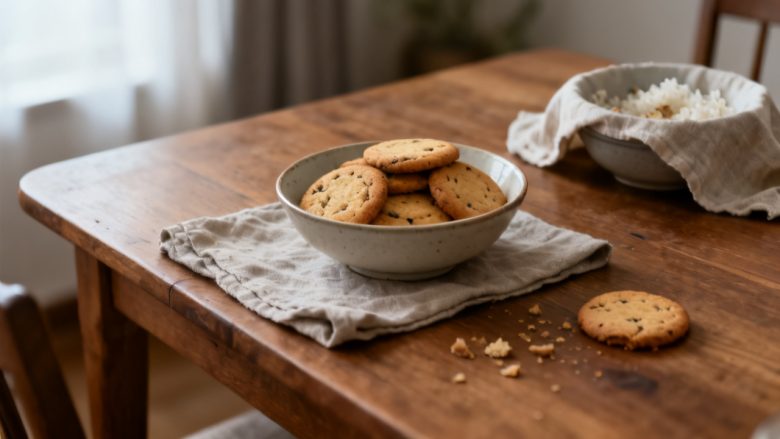
Chewy chocolate chip cookies with flax gel
Mix one tablespoon ground flax with three tablespoons water; rest ten minutes until gelled. Cream butter with brown and white sugar. Beat in flax gel and vanilla. Stir in flour, baking soda, salt, and chocolate chips.
Chill dough thirty minutes for thicker cookies. Bake until edges set and centers look slightly underdone; they firm as they cool.
Chill chocolate chip dough shapes taller cookies; same dough baked flat spreads wide if warm. Two inch spacing minimum on sheet. Sprinkle flaky salt on warm cookies if batch tastes one-note sweet.
Chocolate chip brand with larger chunks needs slight chop for even distribution in small cookies. Mix chips last with spatula not mixer—blade smears chocolate into dough gray streaks.
Half sheet parchment reusable twice if wiped and no burned edges—saves weeknight setup seconds.
Silicone mats reduce spread slightly versus bare metal—note which surface your household prefers on the recipe card.
Oatmeal raisin cookies using yogurt
Stir melted butter or oil with sugar, vanilla, and plain yogurt. Add flour, cinnamon, baking soda, oats, and raisins. Drop spoonfuls on a sheet; bake until golden.
Yogurt adds tenderness without egg flavor. Drain excess whey from thin yogurt so dough is not soupy.
Yogurt cookies stay soft days in tin with bread slice trick—bread sacrifices moisture heroically. Oil-based oatmeal cookies suit dairy-free lunchboxes. Raisins plump ten minutes in warm water if dry and hard.
Oatmeal cookie dough benefits from rest twenty minutes—oats hydrate and spread less. Raisin haters swap dried cranberries or chopped dates without changing wet dry ratio.
Yogurt substitution works in snickerdoodle style when cream of tartar present—helps lift without egg.
Silicone mats reduce spread slightly versus bare metal—note which surface your household prefers on the recipe card.
Shortbread fingers with no substitute needed
Beat softened butter with powdered sugar and salt. Mix in flour until crumb holds when squeezed. Press into a pan or roll logs, chill, slice, and bake low and slow until pale gold.
Pure butter shortbread needs no egg; success is cold dough and patient baking.
Shortbread dough logs freeze three months; slice frozen quarter inch and bake extra two minutes. Parchment sling in pan lifts shortbread slab cleanly for cutting squares. Score while warm for neat edges later.
Shortbread scoring before bake with knife guides clean breaks after pale bake. Lower oven temp longer time yields melt-in-mouth texture versus higher temp pale outside raw center.
Shortbread stamps with fork decorative pattern before bake—kids mark initials ownership rows.
Silicone mats reduce spread slightly versus bare metal—note which surface your household prefers on the recipe card.
Peanut butter cookies from pantry staples
Stir peanut butter, sugar, and a splash of milk or oat milk until cohesive. Roll balls, mark with a fork, bake until lightly cracked on top.
Natural peanut butter works; add a tablespoon flour if dough feels greasy.
Peanut butter cookie fork marks help even thickness so centers bake with edges. Criss-cross twice for classic look kids recognize. Natural peanut butter needs extra flour tablespoon if dough oils out.
Crosshatch fork dipped in sugar between presses keeps fork from sticking peanut dough. Uniform ball size from cookie scoop means even bake batch—no pale centers beside dark edges.
Peanut butter cookies need crosshatch re-dip in sugar if dough sticks fork between balls.
Silicone mats reduce spread slightly versus bare metal—note which surface your household prefers on the recipe card.
Chilling, spacing, and storage
- Chill drop dough at least twenty minutes to reduce spread
- Space cookies two inches apart on parchment
- Rotate sheet halfway if oven browns unevenly
- Cool on pan two minutes before transferring
- Store crisp cookies open; chewy ones in sealed container with bread slice
Egg-free cookies stale differently—match storage to texture goal.
Egg-free means watch bake color not time—without egg browning differs. Set timer two minutes early, check edges. Store types separately: crisp in tin loosely, chewy sealed with bread.
Chewy versus crisp same recipe: higher butter and shorter bake chewier; longer bake and more white sugar crisper. Note preference on recipe card after first batch family vote.
Bake one test cookie first when trying new egg-free formula—adjust minutes before full tray commitment.
Silicone mats reduce spread slightly versus bare metal—note which surface your household prefers on the recipe card.
Bake one batch and label the texture winner
Try flax gel chocolate chip cookies first—they feel closest to classic bakery chew. Note bake time on the jar of flour so the next batch skips guesswork. Egg-free baking improves when you treat substitutes as texture tools, not one-size replacements.
Freeze portioned dough balls on a sheet, then bag frozen; bake from frozen with one to two extra minutes for spontaneous treats.
Jot one note after cooking—what timed out, what you’d repeat—so the next round starts smarter than the last.