Why this chocolate cake works for first-time bakers
Beginner cakes fail when batter is overmixed, pans are wrong size, or ovens run hot. This recipe uses oil for a moist crumb forgiving of slight overbaking, Dutch-process cocoa for deep color, and hot coffee or water to bloom cocoa flavor. One bowl for wet, one for dry—minimal cleanup.
Grease pans, line bottoms with parchment, and flour sides. That trio prevents the stuck-cake panic that discourages new bakers.
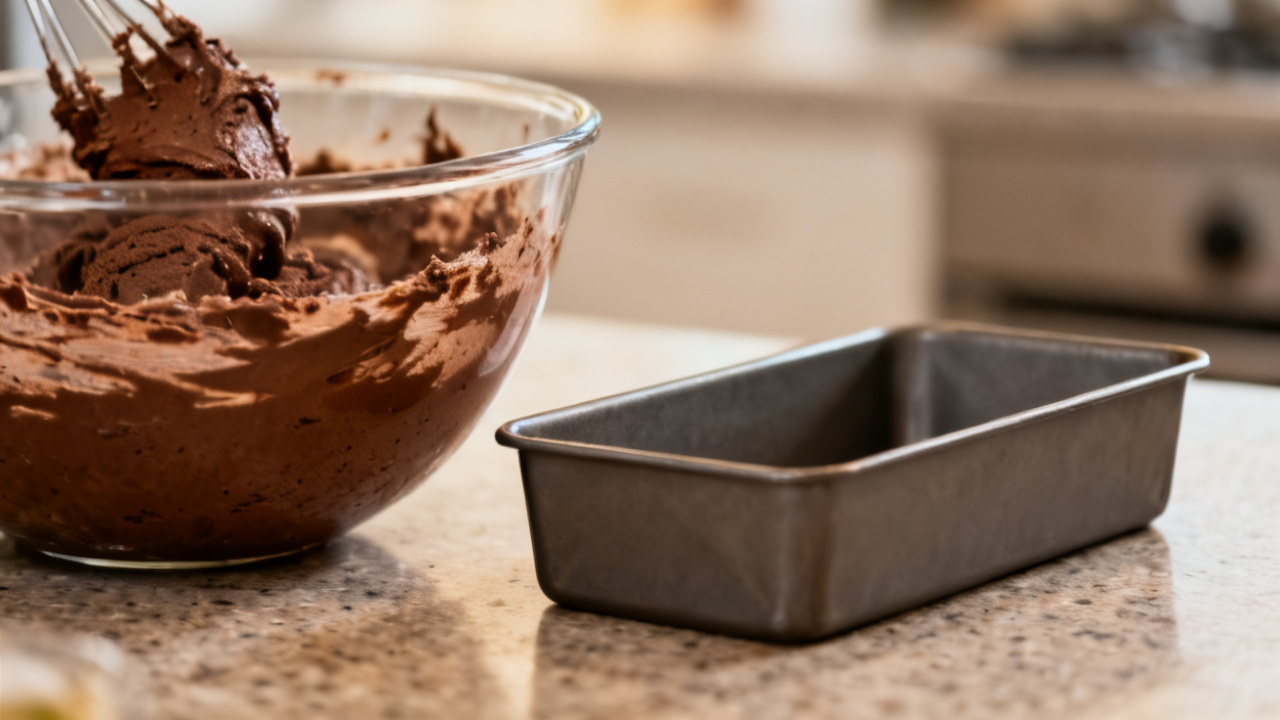
Grease and parchment every beginner bake until release becomes boring habit. Trace pan bottom with pencil on parchment, cut inside line for perfect fit. Flour sides after greasing so batter climbs evenly.
Room-temperature eggs emulsify oil batter smoother—cold eggs leave tiny streaks that bake harmless but look uneven in batter bowl worrying beginners. Warm bowl under tap thirty seconds if forgot.
Digital scale weighing pans ensures even layers—eyeballing batter invites lopsided birthday stacks.
Stand mixer optional—whisk dry thoroughly and fold wet gently by hand if that is what you own.
Dry mix: cocoa, flour, leavening
Whisk all-purpose flour, sugar, Dutch-process cocoa, baking soda, baking powder, and salt. Sift if lumpy; cocoa clumps easily. Measure cocoa by spoon-and-level, not packed scoops, or flavor turns bitter and dry.
Natural cocoa swaps in but pairs with baking soda only—adjust leavening if you experiment later, not on bake day one.
Dutch-process cocoa looks almost black in bag—that’s normal. Natural cocoa lighter and more acidic; this recipe targets Dutch for color. Store cocoa airtight; stale cocoa tastes flat no matter how much sugar you add.
Sift cocoa with dry mix even when flour not sifted—cocoa balls otherwise hide until bite surprises bitter pocket. Whisk dry two minutes boring but cheap insurance.
Cocoa bloom in hot liquid releases flavor—skip hot step and cake tastes flat despite correct bake time.
Stand mixer optional—whisk dry thoroughly and fold wet gently by hand if that is what you own.
Wet mix and the hot liquid step
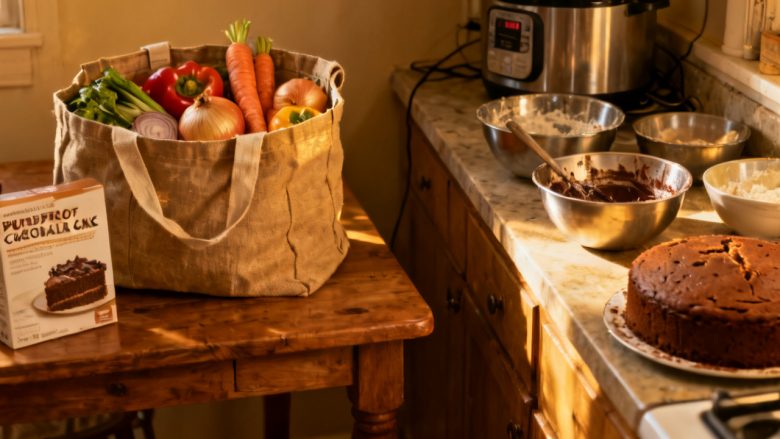
Whisk eggs, milk, oil, and vanilla in a large bowl. Stir dry into wet until nearly combined. Pour in hot coffee or boiling water; batter will thin and look like chocolate soup—that is correct.
Mix until smooth and pour immediately. Thin batter rises evenly and bakes flat enough to stack or frost simply.
Hot coffee deepens chocolate without coffee flavor for most palates—use decaf if caffeine sensitive guests. Mix batter immediately after hot liquid; cocoa bloom happens fast. Batter looks thin; trust it.
Divide batter evenly between pans using scale or eye-level check—uneven layers tilt stacked cake. Tap pans once before oven like cupcakes to settle bubbles.
Oil-based batter stays moist days—cover cut side with wax paper pressed lightly against crumb.
Stand mixer optional—whisk dry thoroughly and fold wet gently by hand if that is what you own.
Bake, test, and cool with patience
Divide between two eight-inch round pans for layers, or one nine-by-thirteen for a sheet cake. Bake until center springs back and pick shows moist crumbs. Cool pans on racks fifteen minutes, then turn out.
Wrap cooled layers in plastic and rest two hours if frosting same day—warm cake tears under spatula pressure.
Doneness test: pick shows moist crumbs not wet batter; cake springs back when pressed lightly center. Cool layers completely before stacking or ganache slides off sides. Wrap overnight unfrosted if splitting across two days.
Sheet cake version needs longer bake lower center than edges—test middle not corner. Rotate once if oven browns one side; foil tent last ten minutes if top darkens fast.
Turn layers out by placing wire rack on pan top then invert together—tap pan bottom if stick worry.
Stand mixer optional—whisk dry thoroughly and fold wet gently by hand if that is what you own.
Easy ganache frosting without a thermometer
Pour hot cream over chopped chocolate; let sit one minute, then stir smooth. Cool until spreadable—thicker than glaze, softer than fudge. Spread between layers and over top for a bakery look with two ingredients.
Too thin? Chill ten minutes and stir. Too thick? Warm bowl over simmering water briefly.
Ganache one-to-one chocolate to cream by weight for spreadable middle ground. Chop chocolate fine so hot cream melts evenly without microwave rescue. Stir gentle circles, not whisk, until glossy.
Ganache split fix: whisk in cold cream tablespoon until glossy returns. Split ganache still tastes fine on casual family cake—perfection optional learning night.
Ganache cools faster spread thin on sheet pan than bowl—ten minutes fridge spreads sooner.
Stand mixer optional—whisk dry thoroughly and fold wet gently by hand if that is what you own.
Beginner troubleshooting table
- Domed, cracked top: oven too hot or too much batter in pan
- Dry slices: overbaked; pull earlier next time
- Sink in center: underbaked or pan bumped while setting
- Bitter edge: too much cocoa or scorched pan sides—lower rack
Write your oven time on the recipe card after the first success. Foolproof becomes personal.
Log oven temp and minutes on recipe card taped inside cabinet. Third bake usually fixes first two mistakes because notes exist. Freeze layers with parchment between for future celebration without day-of stress.
Crumb coat optional for stacked layers—thin ganache layer seals crumbs before final coat. Refrigerate ten minutes between coats if decorating ambition strikes second bake.
Write pan size on card—eight inch versus nine changes bake depth and timing more than beginners expect.
Stand mixer optional—whisk dry thoroughly and fold wet gently by hand if that is what you own.
Frost simply the first time you bake it
Skip elaborate decoration on round one. Ganache or a dusting of powdered sugar proves the cake before you invest in piping practice. Once layers release cleanly and timing is logged, add buttercream or berries between tiers.
Freeze unfrosted layers wrapped well; thaw in fridge overnight for a future celebration without bake-day stress.
Jot one note after cooking—what timed out, what you’d repeat—so the next round starts smarter than the last.