Sunday 4:00 — wash containers, not vegetables yet
Maria’s lunch week starts with containers, not recipes. She pulls four matching 3-cup glass boxes and checks lids—warped lids leak and ruin bags. Then she scans the fridge: leftover rice, rotisserie chicken, two peppers, hummus, cheese. That inventory drives lunch, not a Pinterest grid.
Quick Lunch Ideas to Take cook card
Use this five-line card with the steps below. Illustrative checklist for this topic only.
- Write the cook time you will actually have tonight
- List three pantry items already on the shelf
- Pick one protein or bean can
- Choose one vegetable (fresh or frozen)
- Anchor the plate around quick
15 minutes Sunday: wash boxes, stock napkin and fork in her bag, freeze a backup burrito from last weekend’s batch. Stressful lunches usually fail at packaging, not cooking. When the container hunt takes ten minutes, she buys sad desk salad.
Keep one empty box always clean in the dish rack—tomorrow’s escape hatch.
She keeps a dedicated lunch shelf in the fridge at eye level—leftovers destined for work go there immediately after dinner, not behind yesterday’s yogurt where they die quietly.
Monday batch: grain bowls that survive til Wednesday
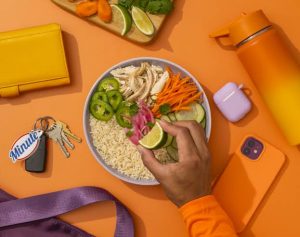
Cook or thaw 3 cups grain—rice, quinoa, or couscous. Roast 2 sheet pans of veg at 425°F for 22 minutes: broccoli, chickpeas tossed with oil and cumin, sweet potato cubes. Portion grains flat, veg on top, protein in the center. Sauce in a 1-oz jar: lemon-tahini or yogurt-dill.
Do not pre-mix sauce. Bowls last 3 days when wet and dry stay apart. Reheat grain and veg 90 seconds, stir sauce. Failure fix: rubbery chicken—use thigh meat or shred rotisserie; breast dries on reheat.
Label masking tape: Mon/Tue, Wed. Sounds admin-heavy; saves 7 a.m. guessing.
Rotate sauces weekly—peanut-lime one week, herb yogurt the next—so identical bowls feel different without new cooking skills.
Tuesday pack: wraps that do not leak
Large flour tortillas, layer order matters: 2 tablespoons hummus or cream cheese spread edge to edge as moisture barrier, then greens, sliced turkey or beans, grated carrot, cheese. Roll tight, cut diagonal, wrap in foil—not plastic first.
Pack pickle or apple on the side; cut fruit touches tortilla and sog. Eat cold or toast in office toaster oven 3 minutes foil open. Failure fix: burst wrap—overfilled; reduce filling 20% and tuck sides before rolling.
Two wraps take 8 minutes Tuesday night if filling is already in the fridge.
Double-wrap the cut side in foil if the commute is bumpy—structural failure at a red light is real, and beans on upholstery ends wrap experiments fast.
Wednesday reset: soup jars and backup crackers
Midweek Maria heats 4 cups leftover soup or opens a good canned tomato soup into a thermos pre-warmed with hot water. Side: 5 crackers, string cheese, apple. Thermos trick: fill with boiling water 5 minutes, empty, fill soup to 1 inch below rim, cap tight.
Soup days are low-decision days—important when work meetings stack. Failure fix: lukewarm soup—thermos was cold; always preheat. No microwave at work? Thermos and wrap days are your friends.
Keep one shelf-stable soup and crackers in the desk drawer for surprise late meetings.
Thursday when leftovers ran out
Assembly lunch: 3 hard-boiled eggs (batch boil 10 minutes, ice bath), 1 cup cherry tomatoes, 1 oz cheddar, crackers, mustard. Or tuna pouch, cucumber slices, pita chips. Total pack time 6 minutes if eggs exist.
Buy a 6-pack of eggs boiled at the store when your week went sideways—no shame, still cheaper than delivery. Pair with fruit so afternoon hunger does not send you to vending machines.
Thursday is designed to use zero stove if needed.
Friday desk lunch without a microwave
Grain salad at room temp: 2 cups cooked farro or rice, chopped herbs, feta, olives, olive oil, lemon, diced cucumber added morning-of. Or peanut butter sandwich on sturdy bread, banana, carrot sticks. Cold lunch does not mean sad lunch if salt and acid are right.
Pack ice pack in summer; grain salads with dairy need it. Failure fix: bland salad—salt and lemon at home before leaving; adjust at desk with pepper packet.
Friday lunch should feel lighter—save hot comfort food for home dinner.
The lunch bag that fits a real commute
Maria uses a flat insulated tote, not a bulky cooler—fits laptop bag side pocket. Ice pack slim against container, upright jars only if lids tested. She keeps one fork, one tiny knife for apples, napkin in a zip pouch so she never uses plastic break-room ware.
Commute over 60 minutes or no fridge at work: frozen juice box as ice pack doubles as drink. Label everything with initials—office fridges eat containers.
Stress-free lunch is mostly gear that works every time, not a new recipe every night.
Replace cracked containers the week you notice them—waiting until three lids fail the same Tuesday is how lunch stress compounds quietly.
The two-minute morning checklist Maria actually uses
Grab box from fridge. Check lid click. Ice pack if dairy or meat. Fork in bag pocket. Done. She does not repack or rethink at 7:12 a.m.—decisions happened last night.
If the box is empty because dinner disappeared, she grabs shelf-stable backup: tuna pouch, crackers, apple. Backup lives in a labeled desk drawer at work and a kitchen basket at home.
Teaching teens the same checklist means one less lunch you assemble. Same containers, same tape labels, same rotation—boring on purpose.
Once a month Maria audits the office fridge policy—some workplaces clear Fridays; she avoids storing Monday soup there if Friday purge is real.
Pack tomorrow’s box while tonight’s dinner dishes soak
After dinner, put one portion aside before plates hit the table. Sauce on the side, lid clicked, done. Two minutes now beats ten minutes of morning panic.
Weeknight Pantry work lunches reward boring containers and predictable rotation—not daily creativity. Master three formats you will actually pack and let the fridge contents vary inside them.
Run Maria’s week once as written—bowl, wrap, soup, assembly, cold salad—before customizing. The structure is the product; your leftovers are just the filler that changes.
Buy one spare lid for your most-used container size—lost lids cause more lunch stress than boring food ever did.